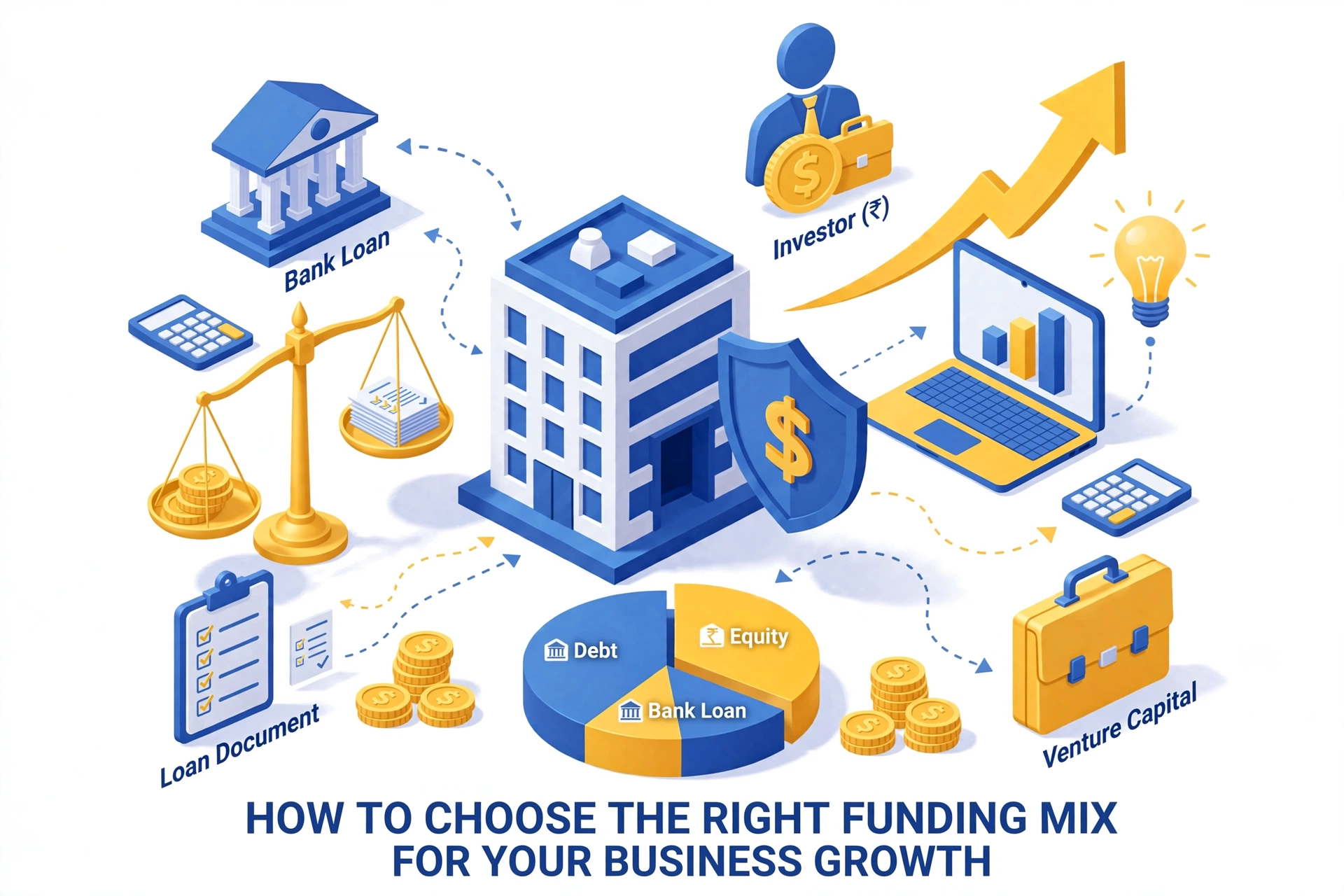
Every growing business reaches a stage where internal cash reserves are no longer enough to support expansion. Whether it’s scaling operations, buying new equipment, hiring staff, or entering new markets, external funding becomes essential.
However, not all financing options are the same — and choosing the right mix can make the difference between sustainable growth and financial strain. The right funding mix ensures that your business maintains stability while maximizing opportunities for expansion.
Understanding the Concept of a Funding Mix
A funding mix refers to the combination of various sources of finance a business uses to meet its capital requirements. It can include:
- Equity Financing: Raising capital by selling ownership stakes or shares.
- Debt Financing: Borrowing funds through loans, overdrafts, or credit lines.
- Internal Accruals: Using profits and reserves to reinvest in the business.
- Alternative Finance Options: Such as invoice discounting, vendor financing, or unsecured business loans.
The ideal funding mix depends on the business’s size, stage of growth, risk appetite, and repayment capability.
Why the Right Funding Mix Matters
Selecting the right mix of financing is not just about accessing funds — it’s about balancing cost, control, and risk. A poorly structured funding plan can lead to cash flow stress, high interest expenses, or dilution of ownership.
A well-balanced funding mix helps in:
- Maintaining liquidity for daily operations
- Optimizing cost of capital
- Reducing financial risk
- Supporting long-term strategic goals
Key Factors to Consider When Choosing Your Funding Mix
1. Nature of Your Business
The type of business you operate influences the kind of funding you need. For instance, manufacturing units may require term loans or equipment finance, while service-based firms might prefer working capital or unsecured credit lines.
2. Stage of Growth
Start-ups often rely on equity or unsecured loans, whereas established businesses may combine long-term debt with internal accruals for stability.
3. Cost of Capital
Different funding sources come with different costs. Loans have interest expenses, while equity financing dilutes ownership. The right mix minimizes overall cost while ensuring flexibility.
4. Risk Appetite
If your business is risk-averse, you might prefer secured or structured financing. On the other hand, if you’re comfortable managing higher risk, unsecured loans or private equity can support faster growth.
5. Cash Flow Position
Strong cash flow allows you to handle regular repayments comfortably, making debt financing more feasible. Weak or inconsistent cash flow may require equity-based or revolving credit solutions.
6. Collateral Availability
If you have assets like property or machinery, secured loans or loan against property can provide cost-effective financing. If not, unsecured or cash-flow-based loans are better suited.
Types of Funding Options to Combine
A smart funding mix can include multiple products depending on your goals:
- Term Loans: For long-term asset creation or expansion projects.
- Working Capital Loans (WCDL): To manage daily operations and short-term expenses.
- Drop Line Overdraft (DLOD): Flexible credit line for recurring business needs.
- Unsecured Business Loans: For quick funding without collateral.
- Vendor Financing: To manage payments and improve supplier relationships.
- Factoring or Invoice Discounting: To unlock funds tied up in receivables.
Each of these options plays a unique role in maintaining both liquidity and financial flexibility.
Tips to Create the Right Funding Mix
- 1. Assess your capital needs — short-term vs. long-term.
- 2. Analyze repayment capacity and ensure loan commitments match projected cash flows.
- 3. Diversify your funding sources to reduce overdependence on a single lender.
- 4. Revisit your funding structure periodically as your business evolves.
- 5. Consult a financial expert or advisor to evaluate risk and optimize capital structure.
Conclusion
Choosing the right funding mix is not just about accessing money — it’s about strategic financial planning. The goal is to find a balance between affordability, flexibility, and control while ensuring the business can grow sustainably.
At PennyFarm Finance, we help businesses design the perfect funding strategy by offering a wide range of financial solutions — from unsecured loans and working capital facilities to vendor financing and project funding.
With the right mix of funding in place, your business can grow confidently, seize opportunities faster, and maintain long-term financial stability.